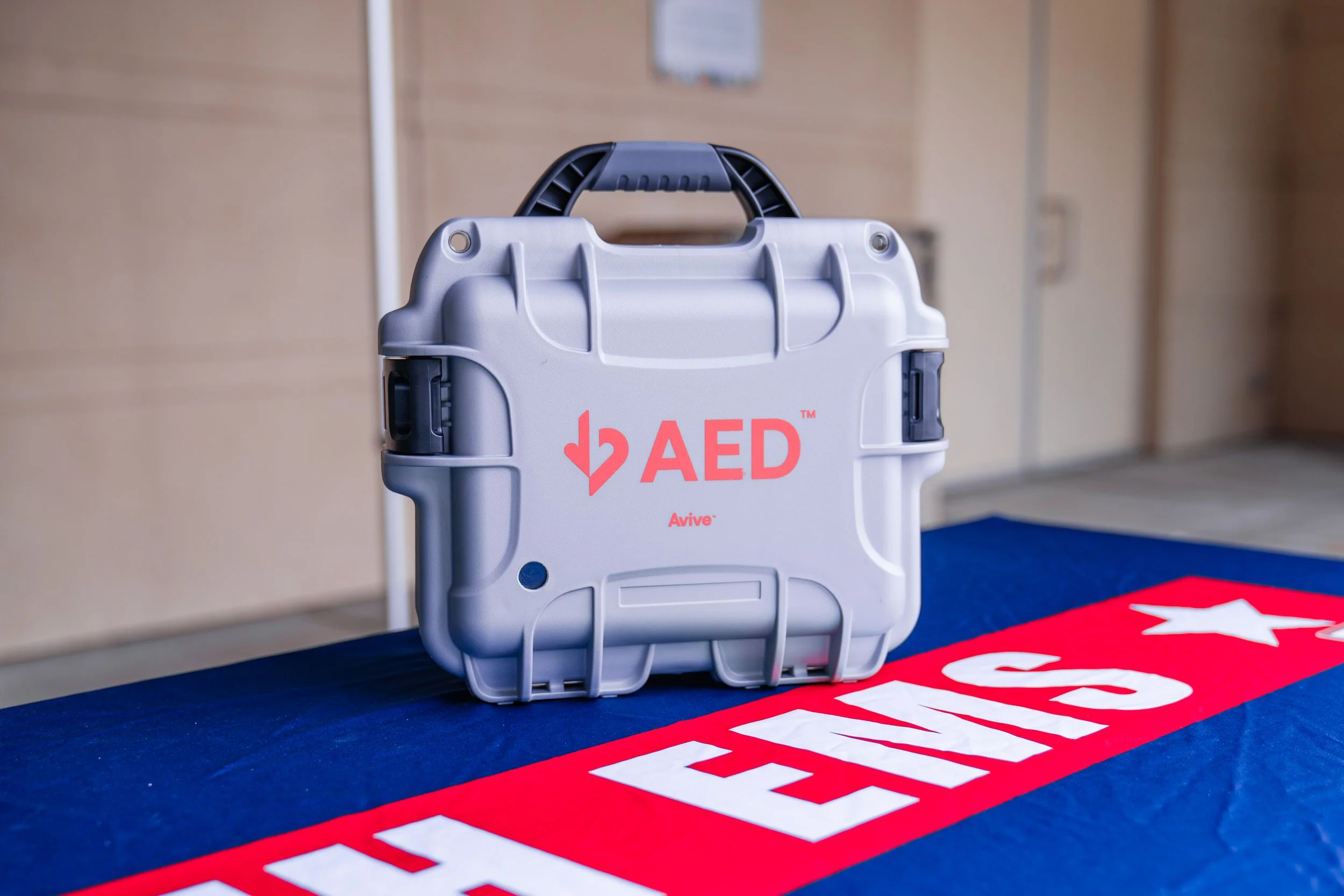
An AED (automated external defibrillator) is a portable device that can restart a heart that has stopped beating normally during sudden cardiac arrest. At a sporting event, an AED should be close enough that someone can get it to any player, coach, or fan within about 3 minutes of a collapse. Keeping it in a known spot, checked regularly, and built into your emergency plan is what turns an AED on the wall into an AED that saves a life.
Smith EMS is a Minnesota-based sports event medical staffing company that provides EMT coverage and short-term AED rentals for high school and youth athletics, tournaments, and events across Minnesota and surrounding states.
Why Do AEDs Matter at Sporting Events?
Sudden cardiac arrest is rare at youth and high school events, but when it happens, every minute counts. The National Athletic Trainers' Association notes that every minute of delay decreases the chance of survival by about 10%. An ambulance, even a fast one, usually can't get there in time on its own.
That's why the AED, and the people who know where it is, matter so much. Sporting events bring together athletes pushing their limits, coaches under stress, and crowds of parents and grandparents. Any one of them could be the person who needs it.
We know event organizers already juggle schedules, staff, and a hundred last-minute details. Chances are, you've:
Walked past the AED cabinet at your venue without knowing when it was last checked
Wondered whether your volunteers would know where to find it in an emergency
Run an event at a field or outdoor venue with no AED nearby at all
You shouldn't have to wonder whether help is ready if the worst happens. Keep reading...
Where Should AEDs Be Placed at Rinks, Gyms, and Fields?
The goal is simple: someone should be able to get an AED to any athlete or spectator within about 3 minutes. The National Athletic Trainers' Association recommends that schools hosting athletic events have an AED on site or accessible within 3 minutes at each athletic venue.
Here's how that looks at the venues we work in every week:
Hockey rinks: Place the AED near the main ice entrance or between sheets, not locked in an office or tucked at the far end of a lobby. In multi-sheet buildings, one AED may not be enough to reach every sheet in time.
Gyms: Keep the AED near the court entrance or the scorer's table, where staff and officials can see it and grab it fast. Make sure it's reachable during events when classrooms and hallways are locked.
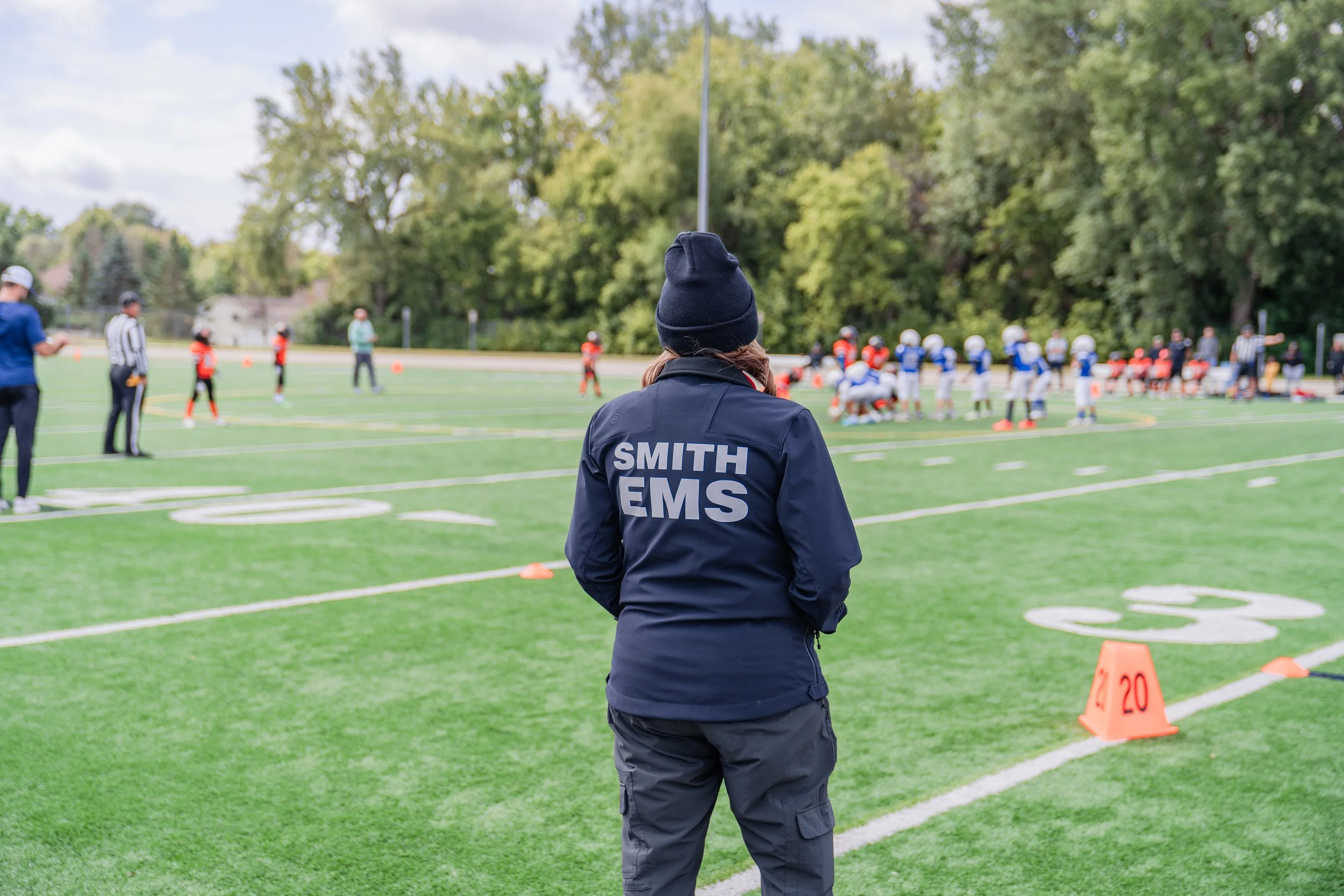
Fields: Outdoor venues are where gaps show up most. Bring an AED to the sideline or keep it with the event's medical staff, especially at fields far from a school building.
Large or spread-out venues: Tournament complexes, cross-country courses, and multi-field parks often need more than one AED.
The best test is a walk. Start at the AED, walk to the farthest point of play, and come back. If that round trip takes more than a few minutes, you need another AED or a better location.
Routine AED Checks and Maintenance
An AED only works if it's ready. Follow the manufacturer's guidance, and make these checks a regular habit:
Status indicator: Most AEDs have a light or display that shows whether the device is ready. Check it on a regular schedule and before every event.
Pads: Electrode pads expire. Check the expiration date, make sure the package is sealed, and confirm you have the right pads for the people you serve, including pediatric pads if young children are present.
Batteries: Batteries also have expiration or replacement dates. A low or expired battery can leave the device unable to deliver a shock.
Expiration dates: Write down pad and battery expiration dates and set reminders to replace them before they lapse.
Cabinet and supplies: Make sure the cabinet opens, the alarm works if there is one, and basic supplies like gloves and a razor are inside.
Temperature: Cold rinks and winter outdoor events can push an AED outside its operating range. Check the manufacturer's temperature limits and plan where the device is stored.
Keep a simple log of each check. It helps you catch problems early and shows your program takes safety seriously.
Who Can Use an AED?
Anyone can use an AED. They're designed for people with no medical training, with clear voice prompts that walk the user through each step. Training in CPR and AED use builds confidence, but it isn't required to help.
In Minnesota, the Good Samaritan law (Minn. Stat. 604A.01) includes using an AED as emergency care and generally protects people who help in good faith without compensation. (This is general information, not legal advice.)
That's why it matters that staff and volunteers know where the AED is. In a cardiac emergency, the first person to reach the athlete is often a coach, a parent volunteer, or a scorekeeper. If they know exactly where to find the AED and someone runs for it right away, valuable minutes are saved.
Show coaches, officials, and volunteers where the AED is before the event starts
Mention the AED location during pre-event meetings or captains' meetings
Post clear signs so spectators can find it too
How Does an AED Fit Into Your Event's Emergency Plan?
An AED is one piece of a bigger plan. Your emergency action plan should spell out what happens in the first few minutes of a cardiac emergency, so no one has to figure it out on the spot.
A strong plan covers:
Who calls 911 and what address and entrance they give
Who gets the AED and the fastest route to it
Who starts CPR until the AED or medic arrives
Who meets the ambulance at the door and leads EMS to the patient
Who clears the area and manages the crowd
Practice the plan with your staff before the season or event. Even a 10-minute walkthrough makes a real difference when it matters. If coverage ever falls through on game day, here's what to do when your event medic doesn't show up.
We Don't Just Staff Medics. We Can Bring the AED Too.
We know event day already comes with a long list, so we make medical coverage the easy part. We've covered 8,000+ games for 80+ athletic program partners.
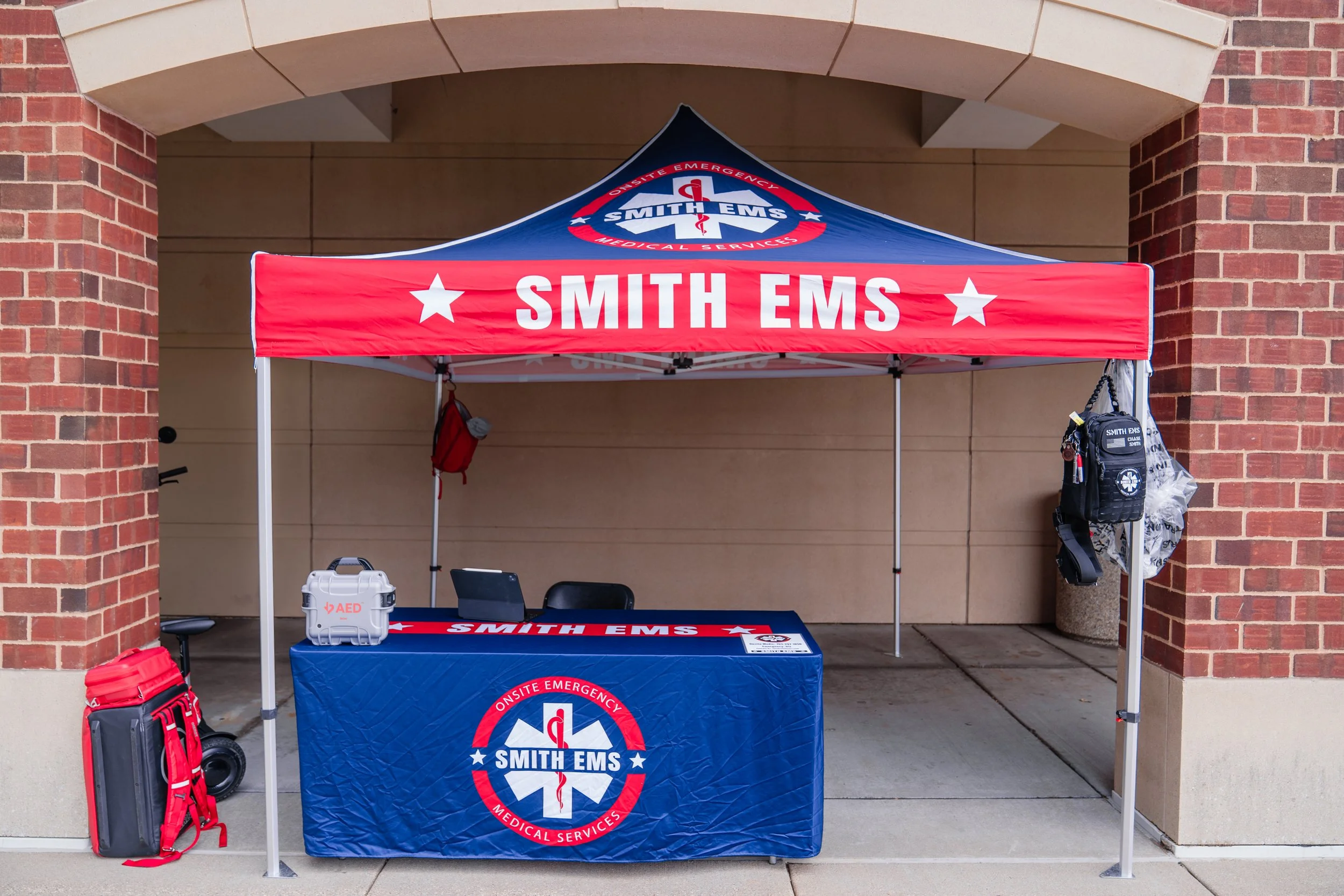
We also offer short-term AED rentals for events. If your venue doesn't have an AED, it's too far from the action, or you need extra coverage for a big tournament, we can provide AEDs for your event alongside our medics.
Response-ready: Our medics are positioned near the action and know where every AED is before the first game starts. That's how we keep a sub-60-second average response time.
Sport-aware: We understand rinks, gyms, and fields, and where an AED needs to be to reach athletes in time.
Always show up: Our W-2 medics arrive 30 minutes early and work under licensed physician medical direction.
Learn more about our sports event medical services, or grab our free EMS Pre-Hire Checklist to see what to look for in an event medical provider.
Step 1: Send Us Your Event Details
Share your dates, venue, and schedule, and let us know whether you need medics, an AED, or both.
Step 2: We Handle Coverage
We assign response-ready EMTs, bring AEDs if you need them, and coordinate with your site contacts. Our medics arrive 30 minutes before the first game.
Step 3: You Run Your Event
You focus on the game. We take care of medical coverage and make sure an AED is where it needs to be.
Frequently Asked Questions
How close should an AED be at a sporting event?
Close enough to reach any athlete or spectator within about 3 minutes. The National Athletic Trainers' Association recommends an AED on site or accessible within 3 minutes at each athletic venue.
How often should an AED be checked?
Follow the manufacturer's guidance, and check the status indicator regularly and before every event. Track pad and battery expiration dates and replace them before they lapse.
Do you need training to use an AED?
No. AEDs are designed for untrained users and give voice prompts for each step, though CPR and AED training builds confidence.
Can I rent an AED for a tournament or event in Minnesota?
Yes. Smith EMS offers short-term AED rentals for sporting events in Minnesota, and can provide AEDs alongside EMT coverage for your event.
Make Sure Your Event Is Ready
An AED that's close, checked, and part of a practiced plan gives every athlete and fan the best chance if the unthinkable happens. With the right setup, you can run your event knowing you're prepared.
Ready to add medics or an AED to your next event? Reach out and we'll help you plan the right coverage.
Signed, Sports Medic Sam