

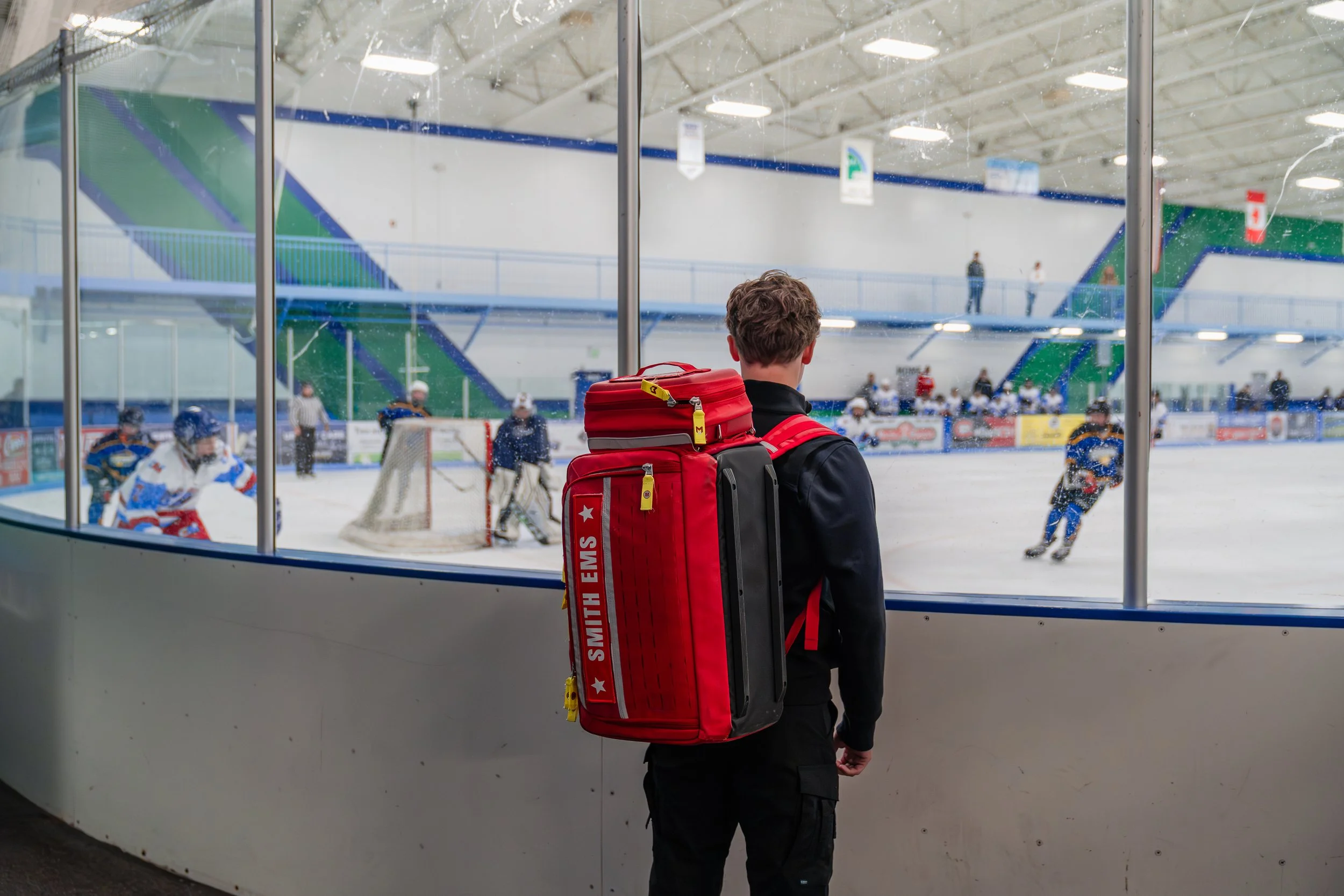
The number of medics a youth hockey tournament needs depends on how many sheets of ice you're running, how the rinks are laid out, and the level of play. There's no one-size-fits-all ratio, but one rule holds: a single medic should never cover more than 3 to 4 sheets of ice. Just as important, the right number only works when medics are positioned well, can reach every sheet quickly, and stay in constant contact with your staff.
Smith EMS is a Minnesota-based sports event medical staffing company that provides EMT coverage for youth hockey tournaments, high school athletics, and events across Minnesota and surrounding states.
Winter Break Tournaments Are a Different Animal
Winter break is one of the busiest stretches on the youth hockey calendar. Families are off work, teams travel in from across Minnesota and beyond, and tournament directors squeeze as many games as possible onto every available sheet from early morning to late night.
We know how much is already on your plate. Brackets, referee assignments, concessions, volunteer shifts, and the parent who wants to know why their team plays at 7:00 a.m. on December 27th.
Chances are, you've:
Been asked "how many medics do we need?" and weren't sure where to start
Had a provider offer to cover the whole building with one person
Worried about how fast someone would actually get to an injured player on the far sheet
You shouldn't have to wonder whether your tournament is truly covered. Keep reading...
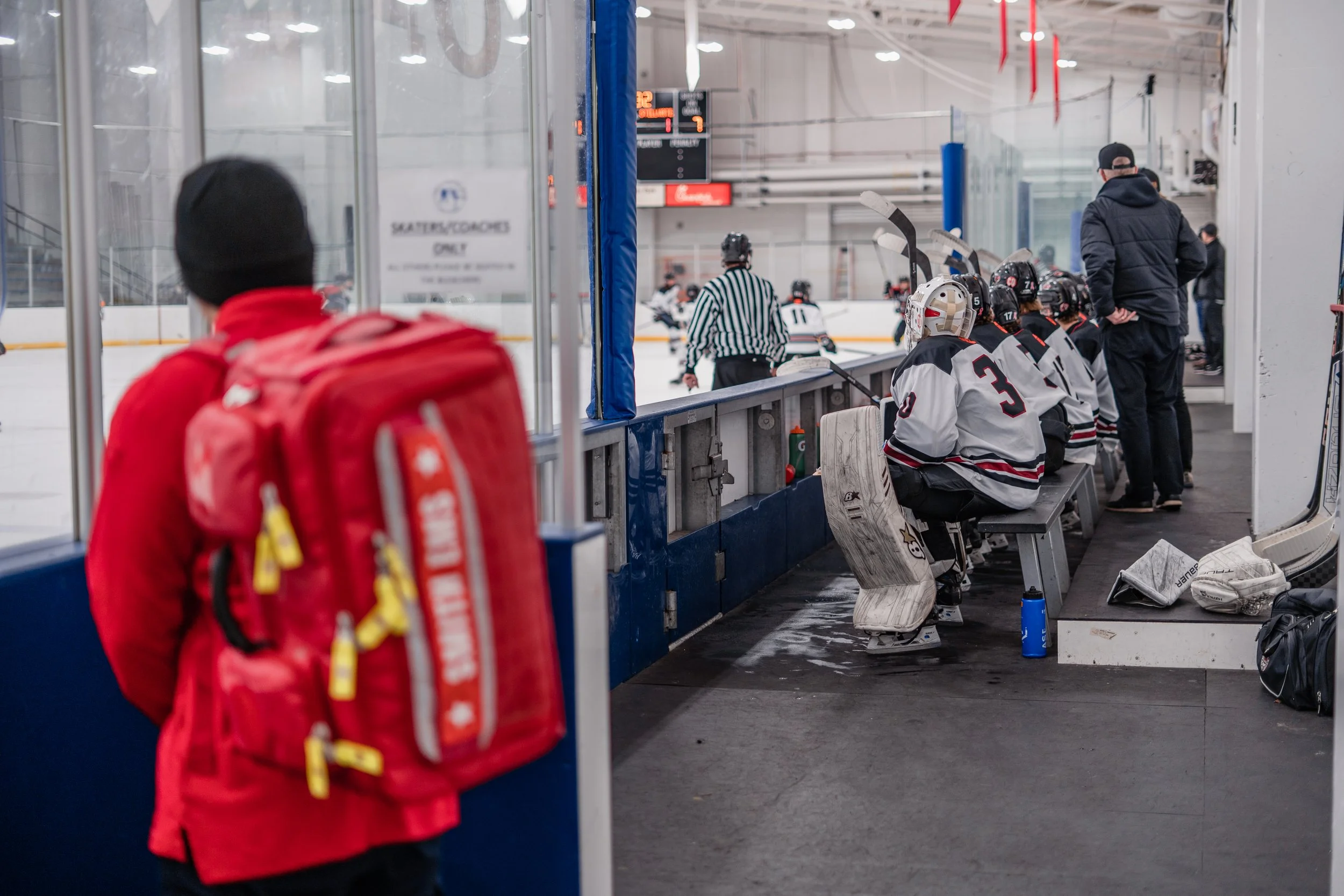
How Many Medics Does a Youth Hockey Tournament Need?
The honest answer: it depends on your venue and your event. Two tournaments with the same number of sheets can need very different coverage. Here's what we look at when we recommend a staffing plan:
Number of sheets in use: More active sheets means more games happening at the same moment, and more chances for an injury at the same time.
Venue layout: Two sheets side by side under one roof are very different from sheets split across separate buildings, levels, or long hallways.
Level of play: Older, faster, checking divisions bring a different injury risk than mites and squirts. A Bantam or high school AAA bracket calls for a different plan than a learn-to-play jamboree.
Schedule density: Back-to-back games from 7:00 a.m. to 10:00 p.m. mean more ice time, more fatigue, and longer days for everyone, medics included.
Crowd size: Winter break brings big crowds of families, siblings, and grandparents. Spectators need help sometimes too.
That's why we don't hand out a formula. We'd rather look at your rink map and your schedule and recommend coverage that actually fits.
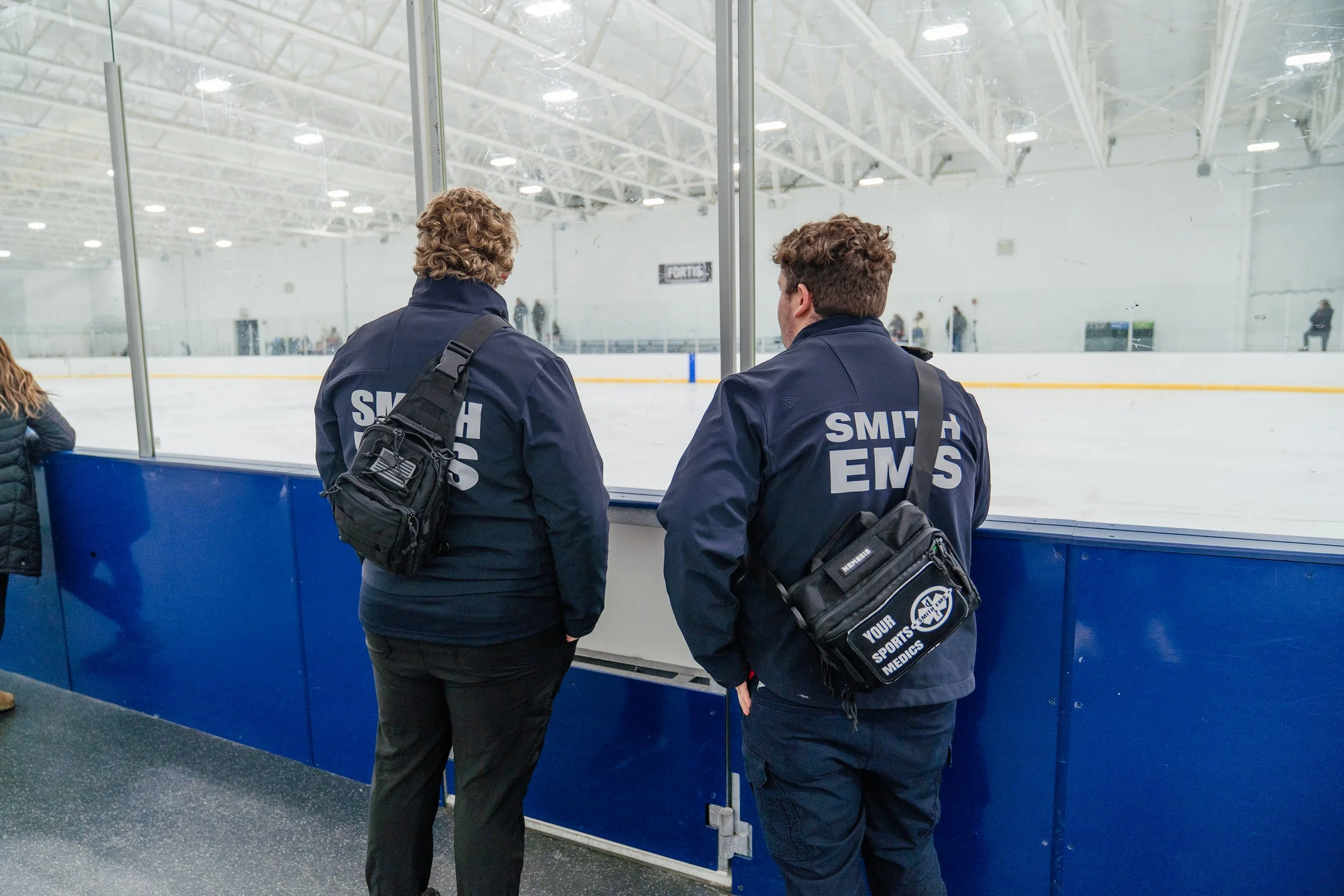
Why One Medic Should Never Cover More Than 3 to 4 Sheets
Some providers stretch one medic across the whole building, as many sheets as the client wants. On paper, that looks like coverage. In practice, it means a medic standing on one end of the facility while a player goes down on the other.
Our line is simple: one medic should never cover more than 3 to 4 sheets of ice, and often fewer depending on layout and level of play. Past that point, a medic can't see the games, can't hear what's happening, and can't get to every sheet fast enough. Coverage you can't reach in time isn't really coverage.
When we plan your event, we'd rather tell you honestly what it takes to cover your building well than promise something one person can't deliver.
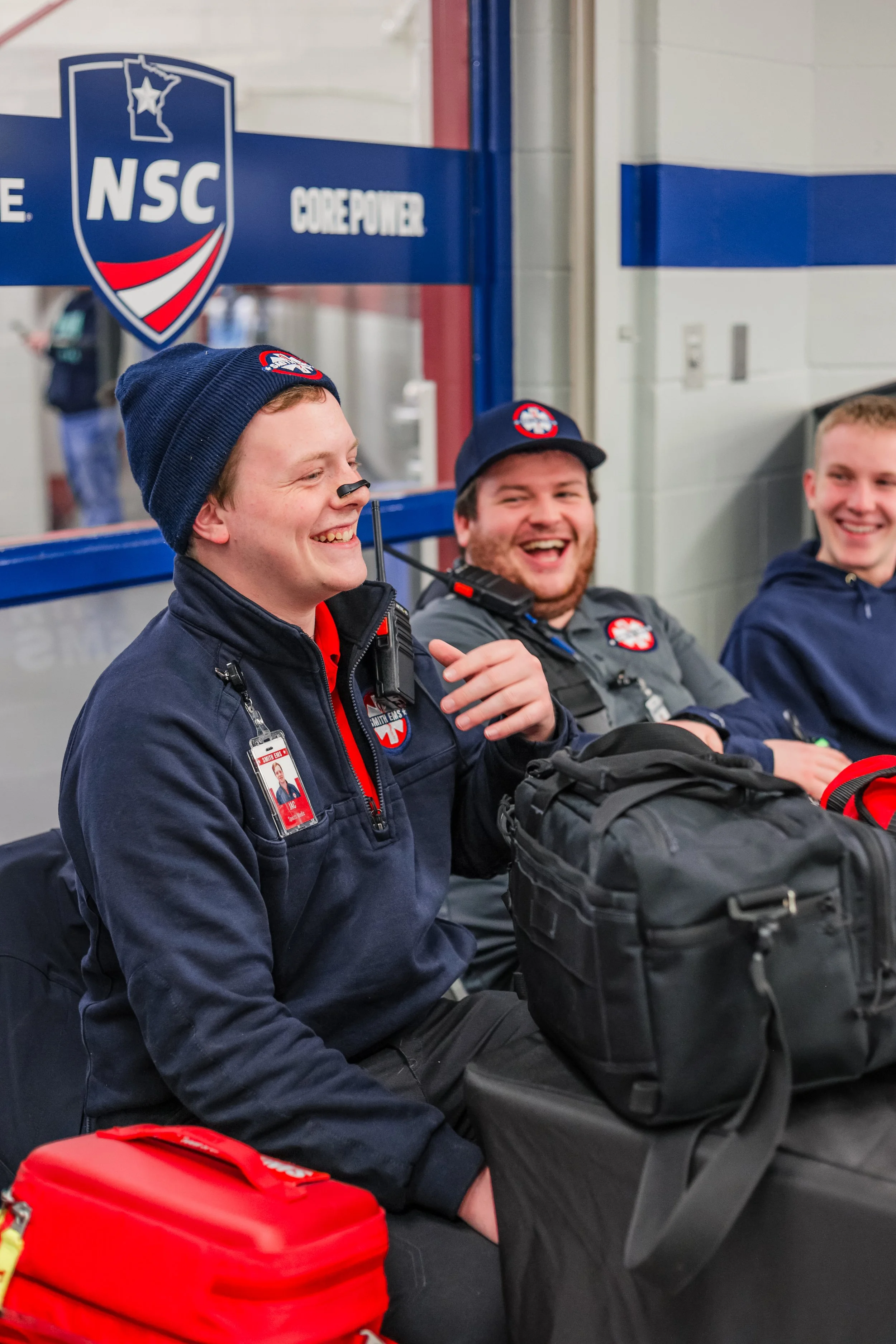
Headcount Is Only Part of It
The right number of medics is a starting point. What makes coverage actually work is everything around that number.
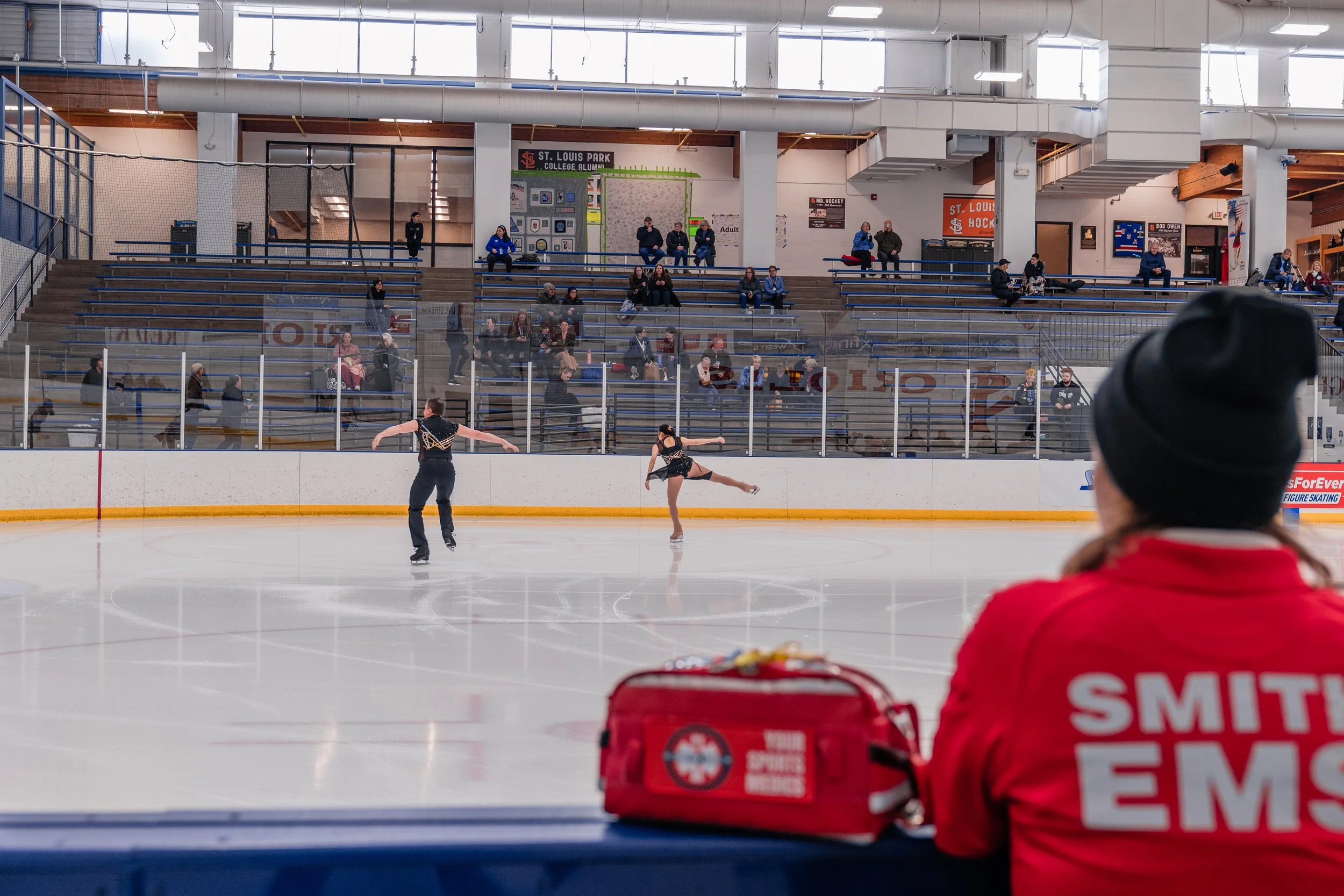
Positioning: Medics should be stationed where they can see the ice and reach it, not tucked in a back room or sitting in the stands. In a multi-sheet rink, that often means a spot between sheets or near the doors players use to get on and off the ice.
Response time to each sheet: Walk the building and ask how long it takes to get from the medic's post to the far corner of every sheet, gear in hand. Stairs, locked doors, crowded lobbies, and separate buildings all add time.
Communication between medics: When more than one medic is on site, they need to stay in contact so one can cover while the other responds. Radios make a big difference here.
Communication with your staff: Rink managers, tournament directors, and volunteers at the scorer's table should know exactly how to reach a medic and where the medics are posted. A clear plan for calling 911 and meeting the ambulance at the right door matters too.
When these pieces are in place, an injury on any sheet gets the same quick response as one right in front of the medic.
How to Plan Medical Coverage for Your Winter Break Tournament
Winter break tournaments fill fast, and so do medic schedules. Here's a simple plan to get coverage locked in without adding to your stress.
Step 1: Send Us Your Schedule and Rink Details
Share your dates, number of sheets, divisions, and how the venue is laid out. A rink map helps a lot.
Step 2: We Recommend the Right Coverage
We'll suggest how many medics you need and where to position them, based on your venue and level of play.
Step 3: You Run Your Tournament
Our medics arrive 30 minutes before the first puck drop, check in with your staff, and handle medical coverage so you can focus on everything else.
If you're still building your plan, our free EMS Pre-Hire Checklist walks through what to look for in an event medical provider. For a longer timeline, see our 6-month hockey tournament safety road map.
Why Tournament Directors Choose Smith EMS
We know how much is riding on a smooth tournament weekend. We've covered 8,000+ games for 80+ athletic program partners, and hockey is a big part of what we do.
Response-ready: Our medics are positioned to see the ice and get there fast, not waiting in a back room. That's how we keep a sub-60-second average response time.
Sport-aware: Our team knows hockey. We understand rink layouts, game flow, and where injuries tend to happen.
Always show up: Our medics are W-2 employees, not 1099 contractors, and they arrive 30 minutes early ready to work.
Medical direction: We operate under licensed physician medical direction, so you get consistent, professional care on every sheet.
Learn more about our sports event medical services.
What Happens If Coverage Is Stretched Too Thin?
When one medic is spread across too many sheets, injured players wait longer for care, games stall, and parents notice. It also leaves your organization exposed if something serious happens and help is slow to arrive. Planning the right coverage now avoids all of that.
Frequently Asked Questions
How many medics does a youth hockey tournament need?
It depends on the number of sheets, the venue layout, and the level of play. As a rule, one medic should never cover more than 3 to 4 sheets of ice, and many venues need more coverage than that.
Can one medic cover a whole hockey arena?
In a small, single-sheet or two-sheet rink, often yes. In a large multi-sheet facility, one medic usually can't see every game or reach every sheet quickly enough to provide real coverage.
When should I book medics for a winter break hockey tournament?
As early as possible. Winter break is one of the busiest times of the youth hockey season, so booking several weeks or months ahead gives you the best chance of getting the coverage you need.
What should a tournament director ask a medical provider?
Ask how many medics they recommend for your venue and why, where medics will be positioned, how they communicate with each other and your staff, and whether their medics are employees or contractors.
Who provides youth hockey tournament medical coverage in Minnesota?
Smith EMS provides EMT coverage for youth hockey tournaments across Minnesota, with W-2 medics who work under licensed physician medical direction and recommend staffing based on each venue's layout and level of play.
Get the Right Coverage for Your Tournament
The best winter break tournaments are the ones where families remember the games, not the wait for help. With the right number of medics, posted in the right places and connected to your staff, you can run your event with confidence that every sheet is covered.
Ready to plan coverage for your winter break tournament? Reach out and we'll recommend the right coverage for your venue and event.
Signed, Sports Medic Sam
